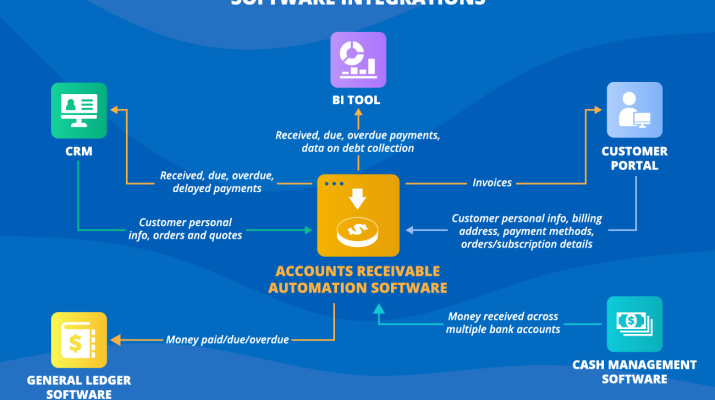
In today’s fast-paced business environment, automated accounts receivable (AR) is revolutionizing the B2B customer experience by streamlining processes and enhancing transparency. Companies that adopt automated AR systems can meet the increasing expectations of modern buyers, who demand convenience and efficiency akin to their personal online interactions. This digital transformation in finance not only reduces manual workload but also fosters a customer-centric AR approach that cultivates stronger relationships and drives loyalty. With real-time insights and flexible payment options, businesses can address customer needs promptly, ensuring satisfaction and retention. As we explore further, it’s evident that the integration of accounts receivable automation is not merely a technical upgrade but a strategic imperative for growth in the competitive B2B landscape.
Revolutionizing financial processes, automated AR systems represent a shift towards enhanced efficiency and client engagement in accounts management. This innovative approach to receivables involves digitally managing billing and payments, making it an essential component of modern finance strategy. The focus on customer-centric AR solutions highlights the importance of providing seamless experiences that align with buyer expectations in a digital-first market. Organizations leveraging this technology can significantly improve their overall operational flow and deliver a purchasing experience that caters to the diverse needs of their business clients. As the landscape of B2B transactions continues to evolve, adopting automated AR becomes crucial for companies aiming to thrive in this new reality.
Applying for a merchant account is a crucial step for businesses looking to process credit card payments and manage online transactions efficiently. The first step in this process is to choose a payment processor that aligns with your business needs. Research different providers to compare their fees, features, support services, and integration capabilities. Once you’ve chosen a provider, you will typically need to complete an application form that requires information about your business, such as its legal structure, financial records, and potentially personal financial information from business owners. Be prepared to provide supporting documents, such as your business license, tax ID, and bank statements, to demonstrate the legitimacy and financial health of your business.
After your application is submitted, the payment processor will review your details to assess risk and approve your request. This process can take anywhere from a few hours to several days, depending on the provider and your business’s unique characteristics. Once approved, you’ll receive your merchant account details, which will enable you to start accepting payments. It’s essential to read through the terms of service to understand fees associated with transactions, monthly maintenance, chargebacks, and any termination provisions. For more insights on optimizing payment processes and enhancing customer experiences, you can explore resources like the one from Payments Dive, which discusses how automated accounts receivable transform B2B customer interactions. Visit their article here: https://www.paymentsdive.com/spons/from-friction-to-flow-how-automated-ar-transforms-b2b-customer-experience/803577/.
Understanding Automated Accounts Receivable in B2B Transactions
Automated accounts receivable (AR) is revolutionizing the way B2B transactions occur by enhancing the overall efficiency and experience for both sellers and buyers. With more businesses adopting digital transformation in finance, automated AR serves as a gateway to speedier processes, such as immediate credit decisions and real-time visibility of transactions. These innovations ensure that businesses not only keep up with customer expectations but also surpass them, leading to a more fluid purchasing journey.
In the realm of B2B, outdated accounts receivable processes can create significant bottlenecks that hinder operations and drive potential clients away. Automated AR eliminates such friction by integrating advanced technologies and automated workflows. This shift not only smoothens payment processing but allows for tailored experiences for varying buyer personas, thus promoting customer-centric AR strategies that cater to the diverse needs of different clients.
The Impact of Digital Transformation on Accounts Receivable
Digital transformation has far-reaching effects on accounts receivable processes, leading to improved customer experiences in B2B relationships. Companies leveraging accounts receivable automation find themselves equipped with tools that allow for better data analysis, which can inform decision-making and enhance inventory management. By integrating automated systems, finance teams can focus less on mundane tasks and instead, pivot to developing strategic relationships that drive business growth.
Moreover, digital transformation fosters a collaborative environment where sales and finance teams share insights and align their goals. With unified systems in place, organizations can achieve better transparency, resulting in stronger trust with customers. This adaptation is crucial since modern buyers demand seamless interactions across all channels, and an optimized AR process can effectively meet these expectations while improving market responsiveness.
Enhancing B2B Customer Experience with Automated AR
Implementing automated AR systems plays a pivotal role in enhancing the B2B customer experience. Buyers are increasingly looking for flexible payment options and seamless communications throughout their purchasing journey. Automated AR setups provide these capabilities by streamlining credit checks and approvals, ensuring that decisions are made in real-time and minimizing delays that can frustrate customers.
Additionally, a customer-centric AR approach tailors experiences based on specific needs and preferences. Companies utilizing technology to adjust their AR processes can deliver personalized services, from self-service portals to dedicated account managers, enhancing the overall satisfaction for clients. This flexibility leads to improved loyalty and retention rates, creating a more loyal customer base that is essential for long-term success.
The Cost of Neglecting Automated AR Systems
Failing to adopt automated accounts receivable systems can be detrimental for businesses looking to thrive in today’s competitive market. Manual, outdated processes can significantly hamper operations, causing delays in revenue collection and leading to stockouts or unfulfilled orders. This not only results in immediate financial implications but also negatively affects long-term relationships with customers who expect streamlined interactions and timely service.
Moreover, organizations that neglect to modernize their AR functions may find themselves at a competitive disadvantage. As buyers increasingly prefer suppliers that provide conveniences aligned with their digital-first expectations, reverting to inefficient manual processes could result in lost business opportunities. To combat this, companies must prioritize automation and harness the power of AR technology to maintain relevancy and customer satisfaction.
Strategies for Building Effective Automated AR Systems
Building an effective automated accounts receivable system requires a comprehensive strategy that focuses on both technology and customer experience. Businesses must invest in sophisticated AR solutions that incorporate automation tools capable of handling credit decisions swiftly while providing a user-friendly platform for buyers. Additionally, ongoing assessment and installment of new features can address the evolving preferences of customers, ensuring that systems remain relevant.
Furthermore, an essential strategy is to foster collaboration between AR and sales teams. By sharing a single view of customer accounts, organizations can fine-tune their approaches towards individual clients, ensuring that communication remains consistent and informed. This synergy leads to a more cohesive customer journey, maximizing the benefits of automated systems while delivering enhanced value that keeps customers engaged and satisfied.
Leveraging Technology for a Customer-Centric AR Approach
Today’s business landscape necessitates a strong reliance on technology to achieve customer-centric accounts receivable strategies. By leveraging advanced technologies such as AI and machine learning, companies can enhance their automated AR processes. These technologies streamline processes like credit scoring and payment tracking, resulting in near-instant decision-making that meets buyers’ expectations for speed and efficiency.
Moreover, investing in self-service capabilities empowers customers, providing them access to view their account information in real-time. When buyers can track their invoices and payments independently, it mitigates frustration while reinforcing trust and transparency, essential components in sustaining B2B relationships. A robust technology framework supports not only efficiency in AR processes but also ensures that businesses remain agile and responsive to customer needs.
Creating Seamless Customer Journeys in B2B
Creating seamless customer journeys in B2B transactions involves understanding the critical touchpoints where accounts receivable plays a role. Companies should examine how customers interact with their AR processes and identify any potential pain points that may arise. By utilizing automated AR solutions, businesses can eliminate friction and ensure a smooth flow of communication and transactions, ultimately enhancing the buyer’s experience.
Establishing informed communication across multiple channels also contributes to a seamless customer journey. Utilizing a centralized AR system allows for clarity in buyer-seller interactions, ensuring that customers receive consistent information regardless of how they engage with the business. This approach to seamless experiences can have lasting impacts, especially in building trust and loyalty, as customers are more likely to return to suppliers who provide hassle-free AR interactions.
The Role of Personalized Customer Experiences in AR Automation
Personalized customer experiences are paramount in enhancing the effectiveness of automated accounts receivable processes. Understanding that each customer is unique, businesses should tailor their AR interactions to align with individual preferences. This may involve offering varied payment options or customizing communication based on buyer history and behavior, thus reinforcing the customer-centric approach.
Furthermore, automation can facilitate personalization by analyzing customer data efficiently and effectively. AR systems that utilize customer insights can proactively address potential issues before they escalate, ensuring that clients feel valued and understood. This level of care not only improves satisfaction but also increases the likelihood of repeat business, solidifying strong, longstanding B2B partnerships.
Measuring Success: Key Metrics for Automated AR Performance
To assess the effectiveness of automated accounts receivable systems, it is crucial for businesses to implement key performance indicators (KPIs) that capture the impacts on efficiency and customer satisfaction. Metrics such as DSO (Days Sales Outstanding), payment processing time, and customer feedback scores provide valuable insights into how well the AR processes are functioning. Tracking these metrics consistently can help identify areas of improvement and fine-tune strategies accordingly.
Additionally, businesses should measure the rate of successful credit approvals and the speed at which disputes are resolved. By continuously analyzing these dimensions, firms can ensure they are not only maintaining efficient operations but also fostering positive experiences for their customers. This commitment to excellence in AR processes ultimately leads to long-term organizational success and fosters strong relationships with customers.
| Key Points | Details | |
|---|---|---|
| The Need for Automation | B2B companies face the risk of losing deals due to outdated AR processes, as buyers expect seamless experiences. | |
| Buyer Expectations | Millennial and Gen Z decision makers demand speed, transparency, and flexibility in B2B transactions. | |
| Impact of Friction | Friction in the AR process can lead to lost deals, jeopardizing long-term revenue opportunities. | |
| Advantages of Modern AR Systems | Automated AR systems streamline processes, providing real-time visibility and responsive customer service. | |
| Technology Integration | Automated credit decisions and self-service options enhance customer satisfaction and loyalty. | |
| Competitive Advantage | Companies with unified AR systems see increased market share, better visibility, and fast credit decisions. | |
| Transformative Power | Reimagining AR as a customer-centric function can unlock growth and enhance customer loyalty. | |
Summary
Automated accounts receivable is revolutionizing the way businesses handle financial transactions, transforming customer experience from friction to flow. As buyers increasingly demand fast, flexible, and transparent purchasing processes, companies are realizing that streamlining their AR systems is crucial for maintaining competitive advantage. By embracing automation, businesses can not only meet customer expectations but also facilitate faster deal closures, enhance customer loyalty, and drive sustainable growth. In today’s rapidly evolving B2B landscape, investing in automated accounts receivable is no longer optional; it’s essential for long-term success.
Automated accounts receivable (AR) is revolutionizing the way businesses engage with their customers and handle financial transactions. In a world where B2B customer experience increasingly mirrors the expectations of personal digital interactions, automating the AR process presents a vital competitive edge. Companies that embrace accounts receivable automation will not only expedite their financial operations but also enhance customer satisfaction through real-time information and seamless interactions. By integrating automated AR systems, firms can significantly reduce friction in their invoicing processes, ultimately leading to stronger relationships and more lucrative deals. As digital transformation in finance continues to evolve, adopting a customer-centric AR strategy is imperative for businesses seeking to thrive in today’s fast-paced market.
The rise of streamlined billing systems, often referred to as automated AR, signifies a shift towards greater efficiency in financial management. This approach aligns closely with the needs of modern B2B buyers who demand responsiveness and flexibility throughout their purchasing journeys. By implementing technology-driven accounts receivable automation, organizations can transform a traditionally cumbersome back-office function into a driver of customer loyalty and growth. Emphasizing a customer-focused experience in accounts receivable not only responds to current market demands but also acknowledges the changing landscape of the B2B customer experience. As businesses navigate digital transformation in finance, leveraging these advanced AR solutions is crucial for success and competitiveness.
Frequently Asked Questions
What is automated accounts receivable and why is it important for B2B customer experience?
Automated accounts receivable (AR) refers to the use of technology to streamline and manage the invoicing and payment collection process in businesses. It’s crucial for B2B customer experience as it enhances transaction speed, reduces manual errors, and provides real-time visibility into account status, which aligns with the digital-first expectations of today’s customers.
How can automated AR enhance the digital transformation in finance for B2B companies?
Automated AR plays a significant role in the digital transformation of finance by digitizing and automating traditional processes like credit decisioning and payment processing. This transformation allows companies to respond faster to customer needs, reduces the friction in the purchasing journey, and enhances overall operational efficiency.
What are the benefits of customer-centric AR in B2B transactions?
Customer-centric AR focuses on delivering a seamless and personalized experience throughout the invoicing and payments process. Benefits include improved customer satisfaction, higher retention rates, faster payment cycles, and the ability to adapt to individual customer preferences, ultimately driving loyalty and repeat business.
How does automated accounts receivable improve cash flow for businesses?
Automated accounts receivable improves cash flow by accelerating the invoicing process, reducing delays in payment collection, and minimizing errors that can lead to disputes. By providing customers with easy self-service payment options and real-time account visibility, businesses can increase their cash conversion cycles and maintain healthier financials.
What challenges do companies face when transitioning to automated AR systems?
Transitioning to automated AR can present challenges such as resistance to change from staff, integration with existing systems, and the need for staff training. Companies must also ensure data accuracy and security while shifting from manual processes to an automated environment. However, these challenges can be addressed with proper planning and stakeholder involvement.
How do automated credit decisioning processes work in automated accounts receivable?
Automated credit decisioning processes in automated accounts receivable utilize real-time data and sophisticated algorithms to assess the creditworthiness of customers. This results in faster decision-making where low-risk accounts can be approved instantly, while higher-risk accounts are quickly routed for further review, minimizing delays in the sales process.
What impact does automated AR have on supplier-buyer relationships?
Automated AR enhances supplier-buyer relationships by reducing friction in transactions, allowing for quicker invoicing, and providing better account management visibility. This efficiency fosters trust and satisfaction among buyers, enabling suppliers to focus on strategic relationship-building instead of resolving payment issues.
What role does technology play in the success of automated accounts receivable systems?
Technology is the backbone of successful automated accounts receivable systems. It enables features like real-time data access, automated payment processing, proactive notifications, and seamless multi-channel communications. This technological integration helps businesses provide a responsive and efficient AR experience that meets customer expectations.
How can businesses measure the success of their automated accounts receivable process?
Businesses can measure the success of their automated accounts receivable processes through key performance indicators such as reduced days sales outstanding (DSO), improved cash flow metrics, customer satisfaction scores, and the rate of invoice disputes. Monitoring these KPIs helps businesses identify areas for improvement and ensure their AR processes meet financial goals.
What future trends are expected in the automated accounts receivable landscape?
Future trends in automated accounts receivable include increased use of artificial intelligence for predictive analytics and decision-making, enhanced integration with blockchain for secure transactions, and the adoption of more flexible payment options. These trends aim to further streamline the AR process and improve the overall customer experience in B2B transactions.
B2B customer experience has evolved significantly in recent years, largely driven by technology advancements and changing buyer expectations. Businesses are now focusing on creating seamless, personalized interactions with their clients. This shift insists on a customer-centric approach that prioritizes understanding the unique needs of each client. By leveraging data analytics and feedback mechanisms, companies can enhance their offerings, streamline purchasing processes, and ultimately build more robust relationships that foster loyalty and repeat business.
Automated Augmented Reality (AR) is rapidly making its way into various sectors, revolutionizing the way businesses interact with customers and clients. With automated AR solutions, companies can provide immersive, interactive experiences that allow users to visualize products in their own environments. This technology is particularly beneficial in B2B contexts, where complex machinery or equipment can be demonstrated in a virtual setting, effectively showcasing their features and functionalities, and aiding customers in the decision-making process.
Digital transformation in finance is reshaping the industry by integrating advanced technologies to enhance efficiency and improve customer service. Financial institutions are increasingly adopting cloud computing, AI, and machine learning to streamline processes, reduce manual errors, and provide faster services to their clients. This transition not only improves operational efficiency but also fosters greater transparency and security, ultimately leading to an enriched customer experience and increased competitiveness in the market.
Customer-centric AR is emerging as a critical component in businesses aiming to improve engagement and satisfaction. This approach utilizes AR technologies not just as a novelty but as a strategic tool to cater to the specific needs and preferences of customers. By designing AR experiences that resonate with the target audience, companies can create tailored solutions that address pain points, assist in product visualization, and foster deeper emotional connections with their brand.
Accounts receivable automation is becoming increasingly vital as businesses strive to enhance financial operations and cash flow. By automating processes such as invoicing, tracking payments, and managing collections, companies can significantly reduce the time and resources spent on these tasks. This not only increases efficiency but also minimizes human error and accelerates the cash conversion cycle. Ultimately, accounts receivable automation contributes to a more customer-focused approach by ensuring timely communications and streamlined payment processes, enhancing overall satisfaction.
In today’s fast-paced business landscape, the importance of an efficient accounts receivable (AR) process cannot be understated. B2B companies are increasingly realizing that their bottom line is threatened by outdated AR systems that fail to meet the expectations of a new generation of buyers. These buyers, predominantly Millennials and Gen Z, are accustomed to intuitive digital interactions in their personal lives and demand the same seamless experience when it comes to business transactions. Failing to modernize AR processes risks losing not just individual transactions, but also long-term relationships and the potential for ongoing revenue streams.
The shift towards automated AR systems represents a crucial evolution in the B2B customer experience. By replacing tedious manual processes with streamlined automation, companies can dramatically reduce the time taken to make credit decisions, simplifying the purchasing journey for buyers. This newfound efficiency is vital; research indicates that a significant number of B2B buyers will favor suppliers that are easy to do business with. When credit approvals can be achieved in real-time, and buyers can access their account information online, the overall customer satisfaction improves significantly, fostering loyalty and long-lasting partnerships.
Moreover, the technology that underpins these automated AR systems is designed to be customer-centric, allowing for personalized interactions and flexibility in how customers engage with the process. With features such as tiered credit decisioning based on risk assessments and multi-channel service options, customers have greater control over their purchasing journey. They can access information and resolve issues through their preferred channels, whether it be through digital portals or by speaking to a representative. This level of customization not only enhances the customer experience but also positions companies to better retain their clients and grow market share.
The competitive landscape in B2B transactions is evolving, making it imperative for companies to innovate their AR processes. Organizations that harness the power of automated AR not only find themselves reducing operational costs and increasing efficiency but also gaining a competitive edge in a crowded marketplace. By prioritizing customer experience within their AR functions, businesses can ensure they remain relevant and appealing to next-generation decision makers, ultimately not only retaining existing clients but also attracting new ones in a customer-driven economy.
In summary, the transformation of accounts receivable from a back-office function to a strategic, customer-facing component is essential for modern B2B companies. As buyers demand faster, more transparent, and hassle-free interactions, automated AR systems provide the necessary tools to create an exceptional customer journey. Firms that adopt these innovations will not only enhance their relationships with clients but will also secure their position as leaders in their industries, demonstrating that understanding and adapting to buyer needs is the key to sustained success.